FDM (Fused Deposition Modeling)
A 3D printing process that melts filament and lays it down line by line through a nozzle. Cost-effective for functional prototypes and large parts.
Glossary
Processes such as FDM, SLA, DLP, SLS, MJF, SLM, DMLS and PolyJet, printing terms such as supports, tolerance and mesh, and material and finishing terms in one place.
Quick answer
3D printing processes fall into material extrusion (FDM), vat photopolymerization that cures resin with light (SLA, DLP), powder bed fusion that fuses powder (SLS, MJF, SLM, DMLS) and material jetting (PolyJet, MJP). This glossary collects process, material, file and finishing terms in one place.
By Seo Jeongju, CEO of WOW3DLast updated
A 3D printing process that melts filament and lays it down line by line through a nozzle. Cost-effective for functional prototypes and large parts.
A vat photopolymerization process that cures resin point by point with a laser. Strong on smooth surfaces and fine detail.
A vat photopolymerization process that cures a whole resin layer at once with projected light. Efficient for repeated small precision parts.
A powder bed fusion process that sinters powders such as nylon with a laser. Builds complex functional parts without supports.
A powder bed fusion process that jets a fusing agent onto powder and fuses a whole layer with heat. Efficient for many nylon parts at once.
A metal 3D printing process that fully melts metal powder with a laser to build dense metal parts.
Another name for the same family of metal powder laser processes as SLM.
A material jetting process that jets resin from a print head and cures it immediately. Strong on fine detail and material combinations.
A material jetting process that jets and cures resin, often with wax supports that are melted away.
Processes that spread powder thin and fuse only the needed areas. SLS, MJF, SLM and DMLS belong here.
Processes that jet droplets of liquid material and cure them layer by layer. PolyJet and MJP belong here.
Processes that cure liquid resin with light. SLA and DLP belong here.
The thickness of one layer. Lower is smoother but takes longer to print.
The internal structure and density that fills an FDM part. Affects strength, weight and print time.
Temporary structure printed to hold up overhanging areas. Removed after printing and affects cost and surface.
Geometry that sticks out with nothing underneath. Steep overhangs need supports.
Geometry spanning the air between two points. Long bridges can sag or need supports.
The allowed difference between designed and printed dimensions. Assemblies are designed with clearance.
The thinnest wall that prints reliably. The limit depends on process and material.
The most widely used 3D printing file format, describing shapes with triangular faces.
A 3D printing file format that can carry units, color and material information along with geometry.
A precise solid geometry exchange format used in CAD. Converted to a mesh before printing.
The set of vertices, edges and faces forming a 3D shape. It must be free of holes and flipped faces to print correctly.
A mesh that is fully closed with no holes. A basic requirement for 3D printing files.
A mesh error, such as an edge shared by three or more faces, that cannot exist as a real solid.
The plate the part is built on. Each machine has a defined build size.
Finishing after printing, such as support removal, washing, curing, sanding, painting and dyeing.
Curing a washed resin part again with light and heat to increase its strength.
A finishing method that colors nylon powder parts. Black dyeing is the most common.
Materials mixed with glass or carbon fiber for higher stiffness, such as PA12 GF and PA6-CF.
The most widely used nylon in powder bed fusion, with a good balance of strength and toughness.
A high-performance engineering plastic with high heat and chemical resistance.
A grid-like internal structure that saves weight while keeping stiffness. A signature advantage of additive manufacturing.
Making only the quantity needed by 3D printing without tooling. Useful when designs change often.
Real Output
Parts we printed in-house on FDM, SLA and DLP machines. See more in the print gallery.
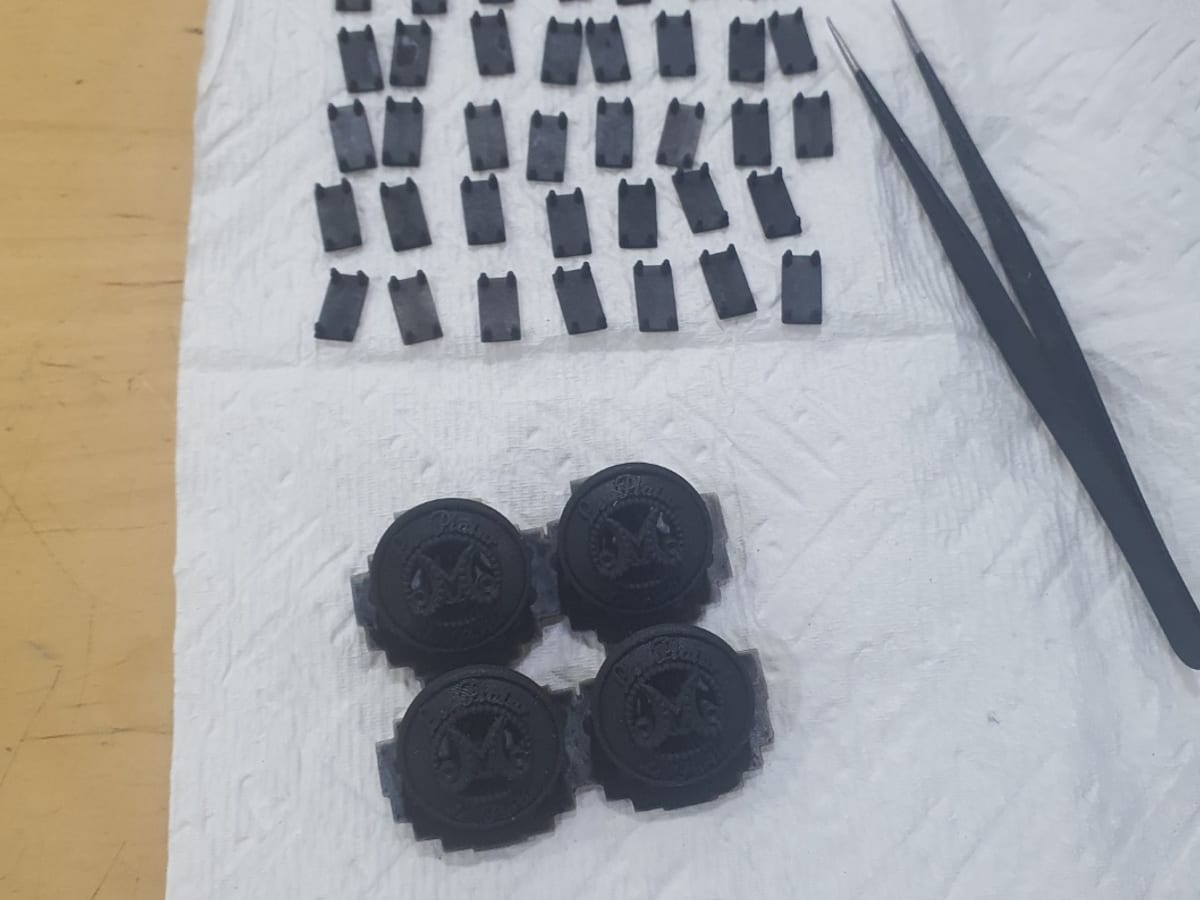
Garment buttons and jig
DLP · Black resin
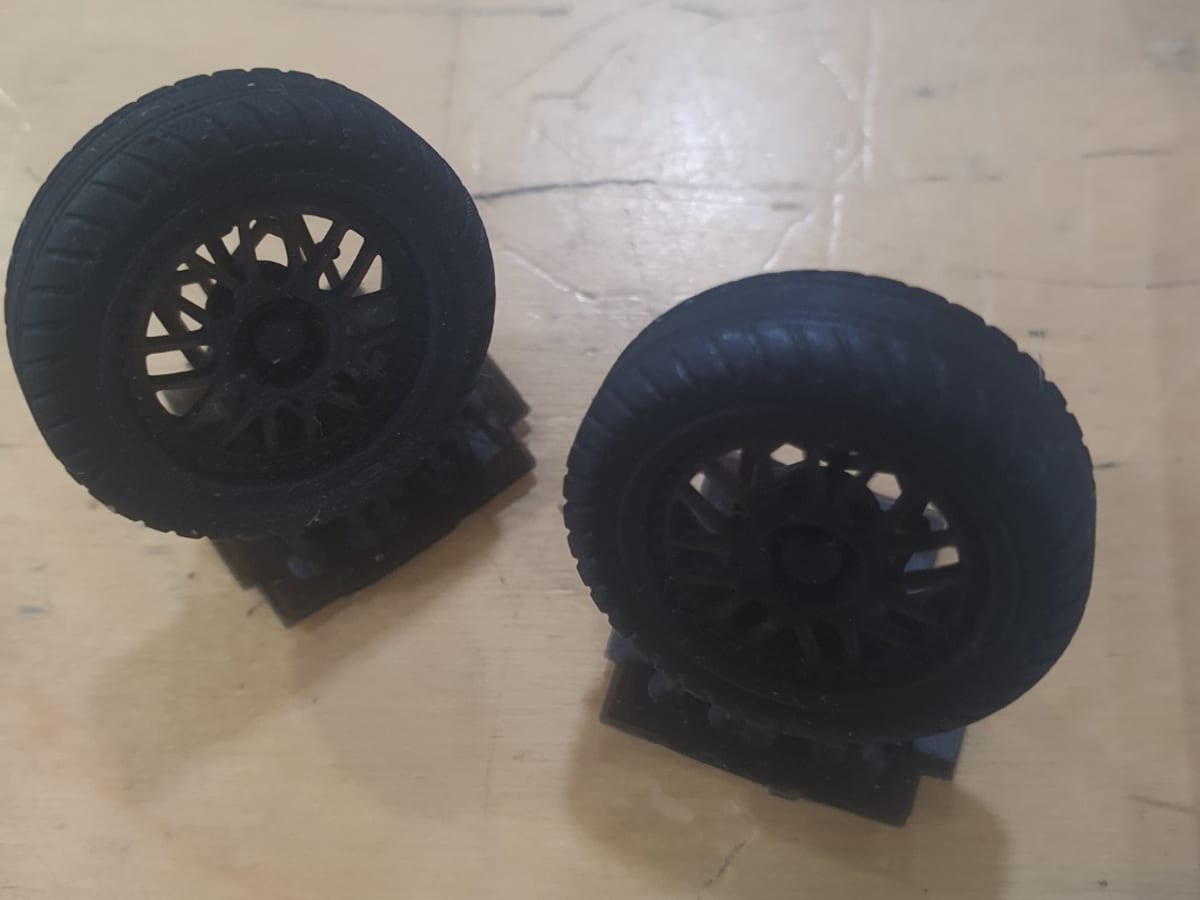
Scale model car tires
DLP · Flexible resin
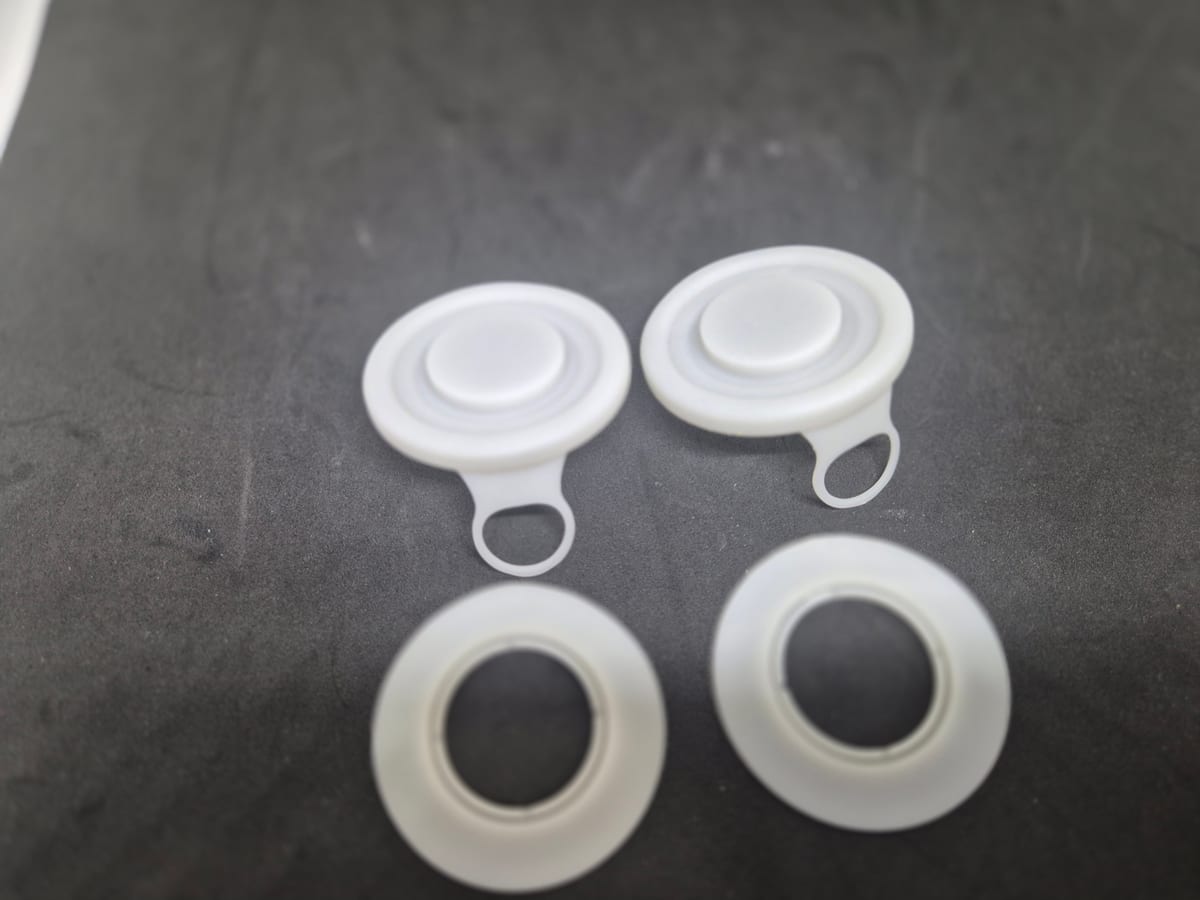
Bottle cap prototype
DLP · White resin
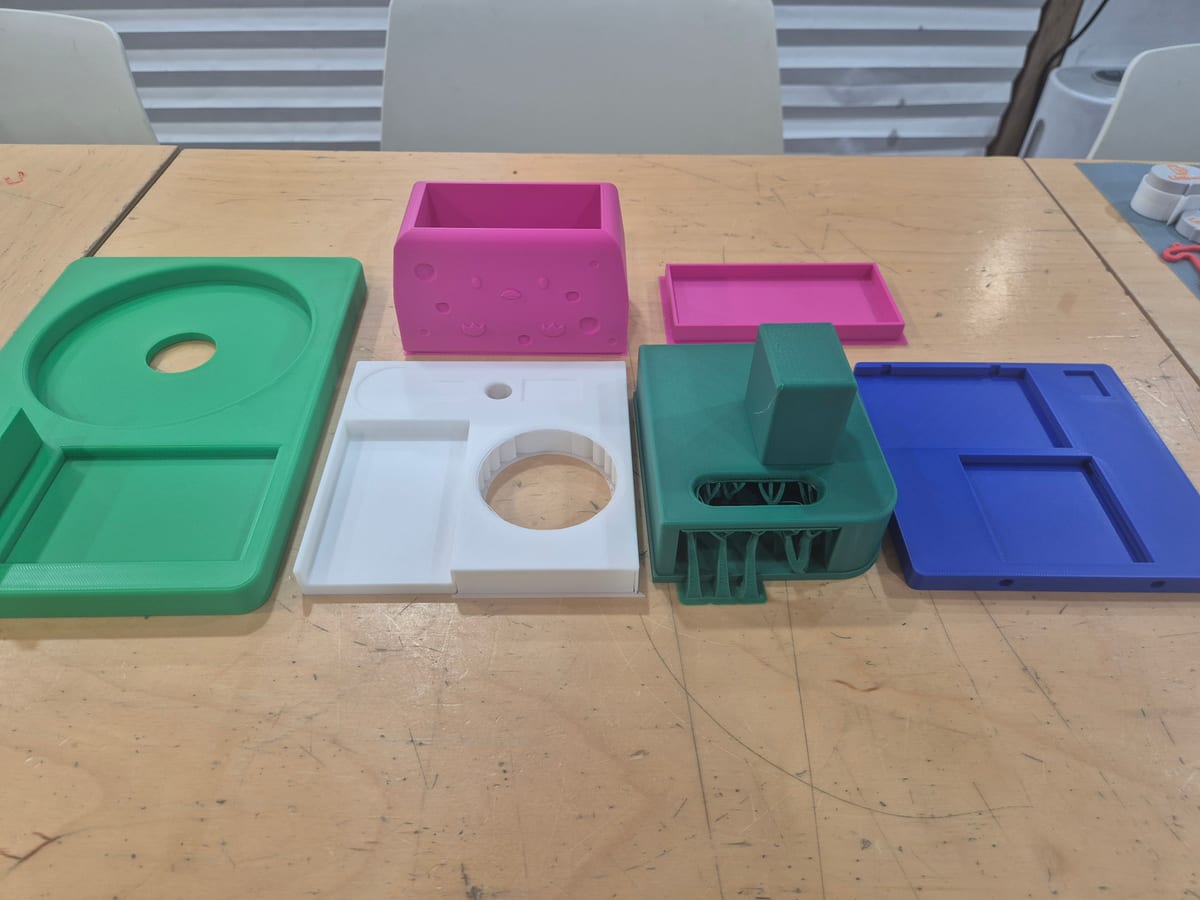
Arduino product enclosure
FDM · PLA
Into material extrusion that melts and lays down material (FDM), vat photopolymerization that cures resin with light (SLA, DLP), powder bed fusion that fuses powder (SLS, MJF, SLM, DMLS), and material jetting that jets and cures material (PolyJet, MJP).
The print methods page compares each process and its uses. FDM, SLA and DLP are priced instantly when you upload a file, and industrial processes are quoted by our experts.