Standard / Tough
For looks-first parts, Standard; when function and assembly matter more, Tough is often the better fit.
A side-by-side look at four resins often chosen for SLA and DLP. Quickly match visual prototypes, functional tests, clear parts, or flexible parts to the right resin.
Quick answer
Use Standard resin for visual and detail prototypes, Tough resin for assembly, snap-fit and functional tests, Clear resin for covers and windows that must be transparent, and Flexible resin for grips and gaskets that need to bend. Clear resin needs post-processing such as polishing and coating to reach high transparency.
By Seo Jeongju, CEO of WOW3DLast updated First published
Tap a resin name or cell in the table, or a card below, to see its detailed guide.
| Item | ||||
|---|---|---|---|---|
| Key traits | Excellent surface & detail | Strong & impact-resistant | Clarity & visibility | Flex & cushioning |
| Best for | Visual prototypes | Assembly & functional tests | Covers, windows, observation parts | Grips, cushions, soft parts |
| Pros | Economical; great expression | Durability and fastening | High clarity after finishing | Allows deformation; absorbs impact |
| Watch-outs | Limits under functional loads | Cost can rise | Finishing often required | Hardness & storage conditions matter |
For looks-first parts, Standard; when function and assembly matter more, Tough is often the better fit.
Clear for transparent parts; Flexible when you need bend or cushioning.
Visual Prototyping
Standard resin is the baseline photopolymer for SLA and DLP printing. Its surface is so smooth that layer lines are barely visible, and it captures fine detail exceptionally well, making it the first choice for appearance prototypes and precision models.
Functional Resin
Tough resin is a functional resin formulated to approach the strength and toughness of ABS. It keeps the precise surface of resin printing while standing up better to impact and load, so it is chosen for prototypes that need assembly, fastening, and functional testing.
Transparent Resin
Clear resin makes transparent parts that let light through. Straight off the printer it is closer to translucent, but post-processing such as polishing and coating brings out high clarity where internal features are clearly visible—ideal for covers, windows, and flow-visualization parts.
Flexible Resin
Flexible resin stays elastic after curing, bending and compressing like rubber. Depending on the product it can feel anywhere from soft to firm rubber, so it is chosen to check the shape and feel of parts that must deform, such as grips, gaskets, and cushioning.
Standard resin is used most for general appearance and design checks. Smooth surfaces and fine detail make it a strong fit for visual prototypes.
Usually yes. Tough typically handles impact and load better than Standard—better for fit checks, fastening tests, and functional prototypes.
Yes. Covers, windows, and observation parts that need visibility suit Clear. For high clarity you may still need polishing or coating.
Real Output
Parts we printed in-house on FDM, SLA and DLP machines. See more in the print gallery.
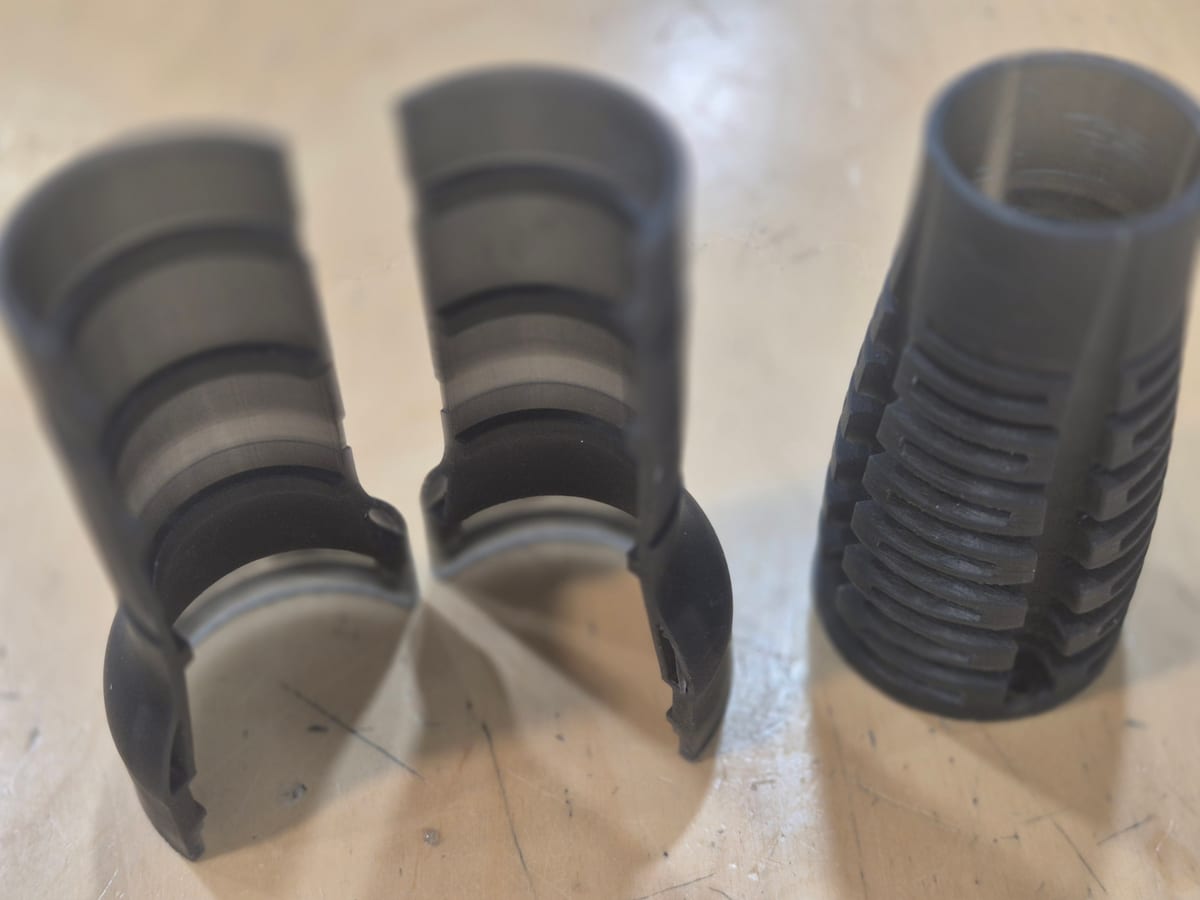
Flexible resin mechanism
DLP · Flexible resin
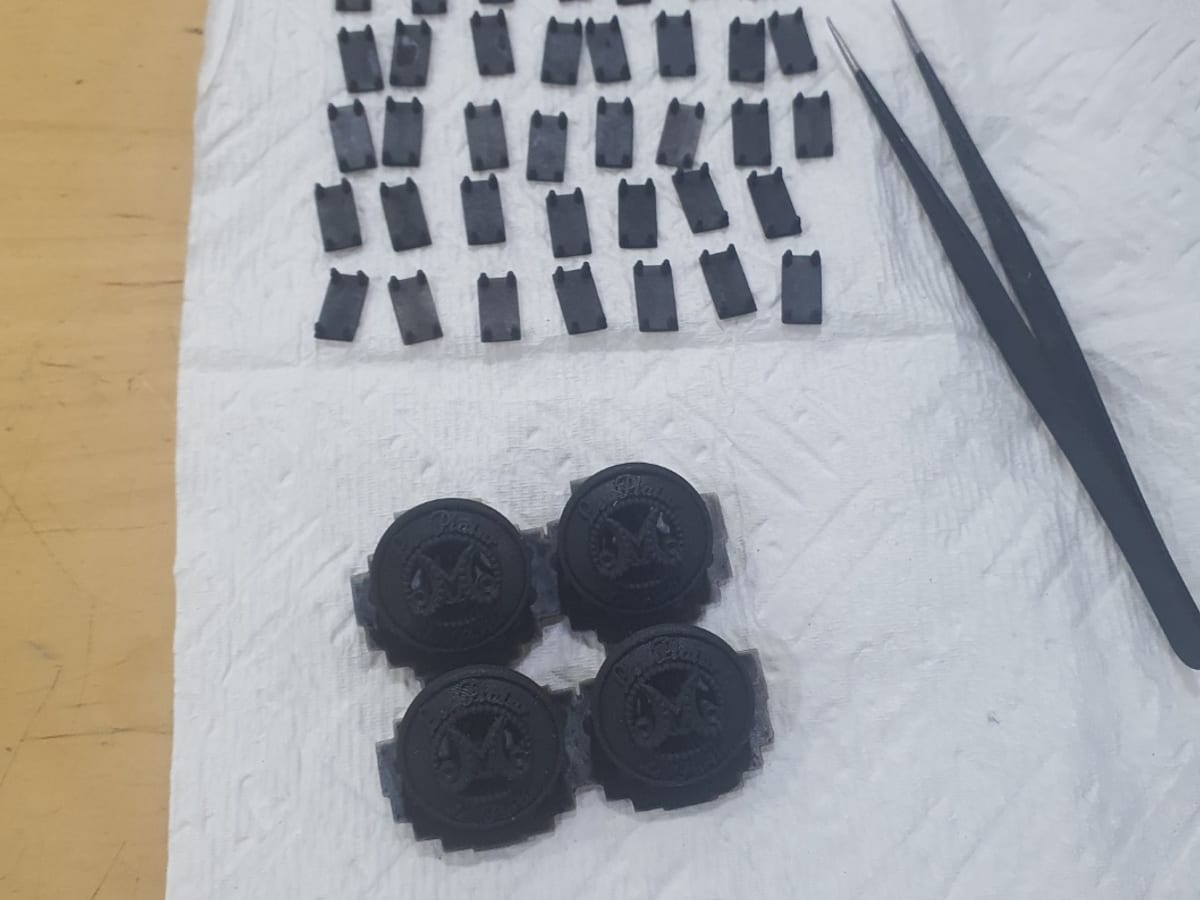
Garment buttons and jig
DLP · Black resin
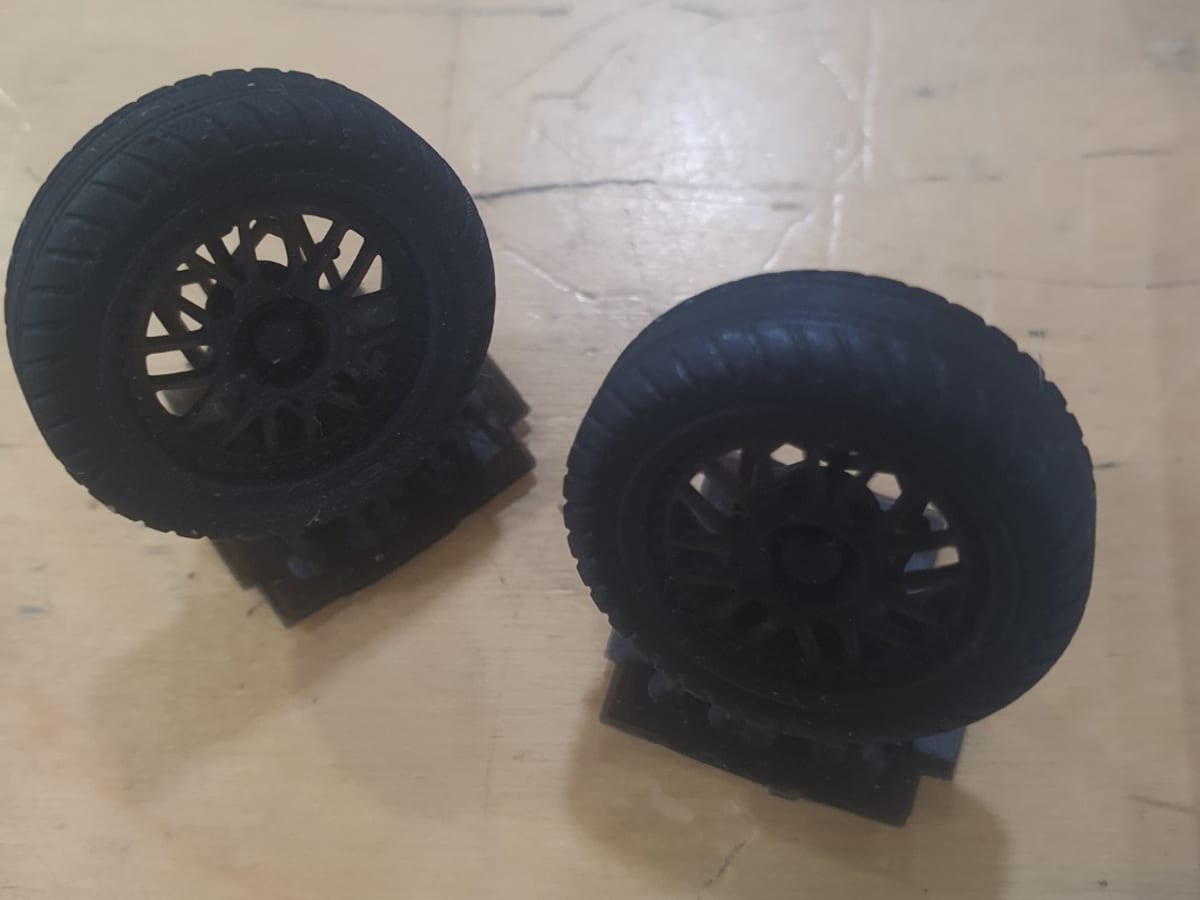
Scale model car tires
DLP · Flexible resin
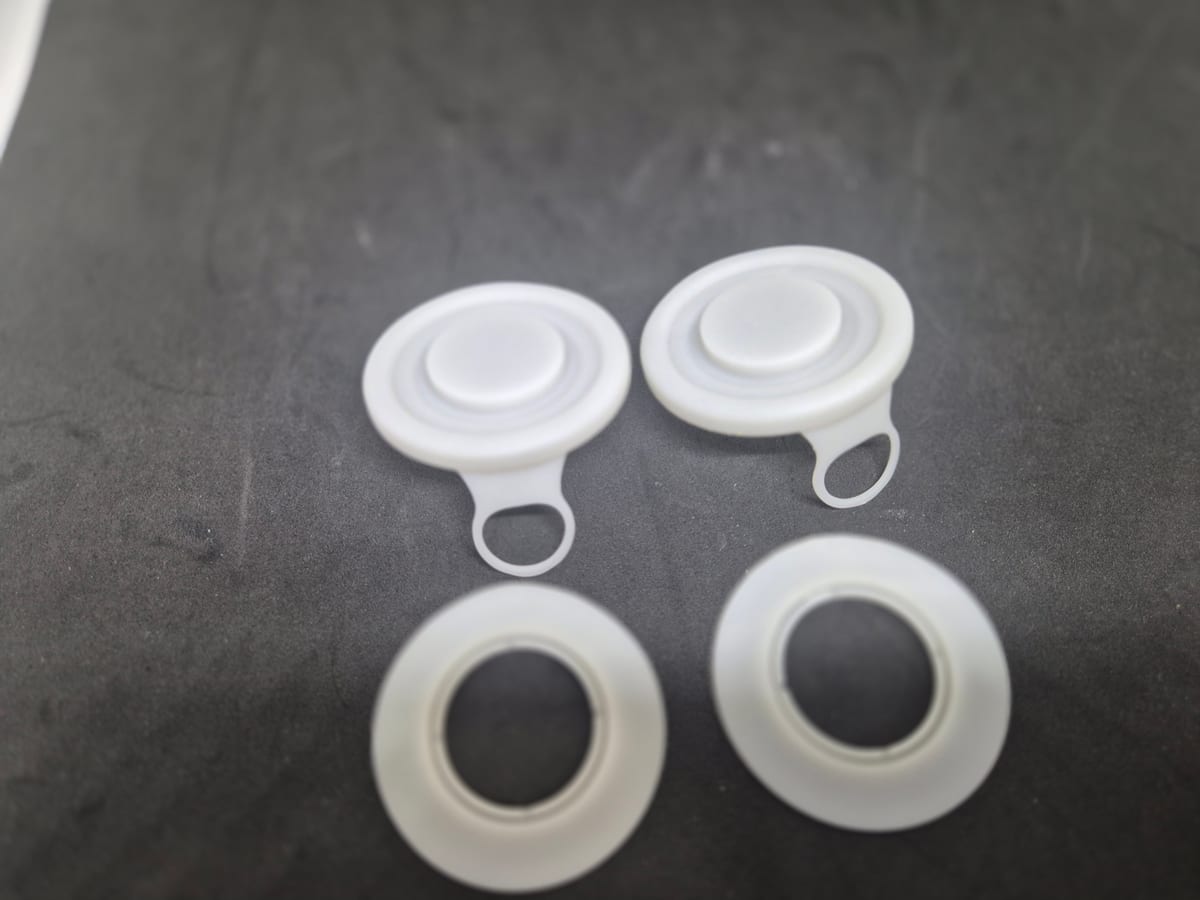
Bottle cap prototype
DLP · White resin